All of it, in one
Click through it.
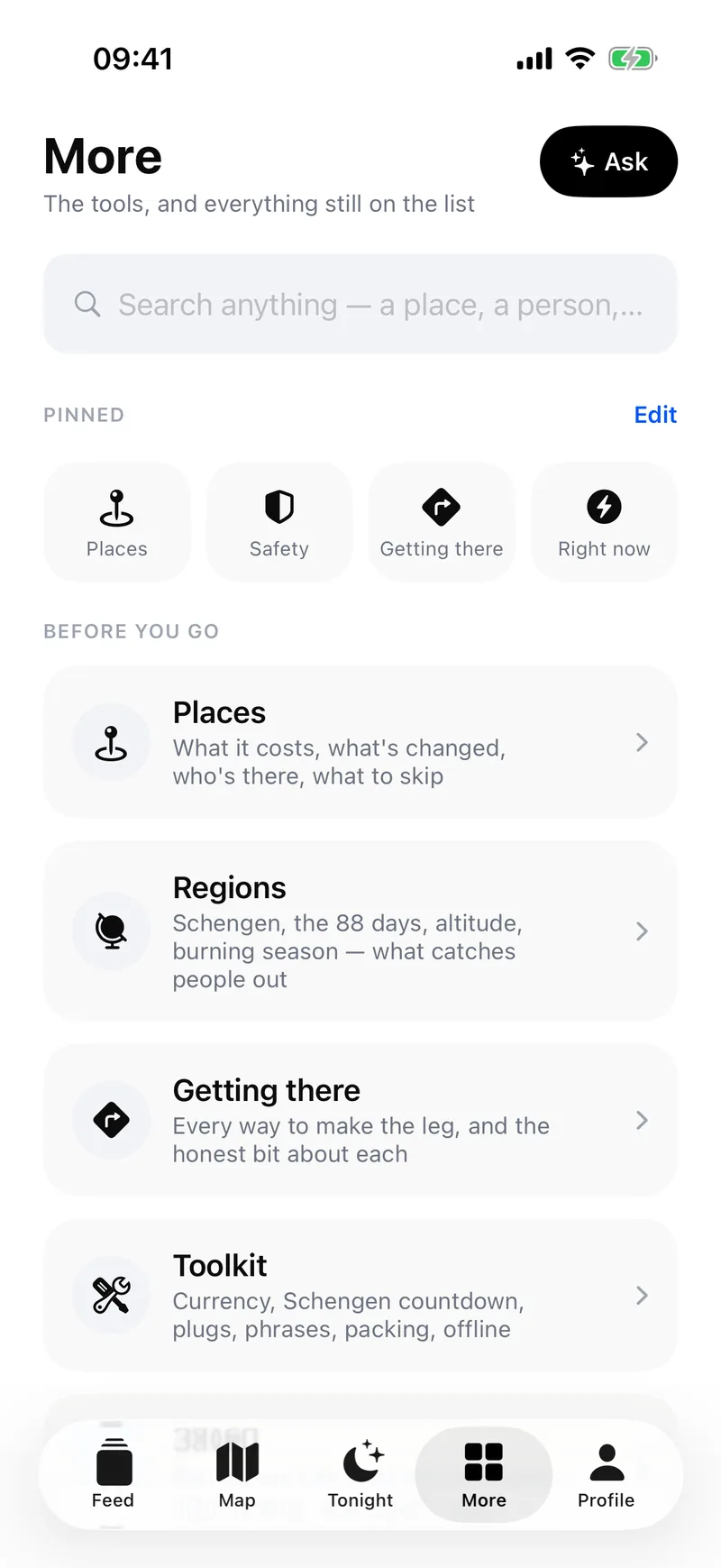
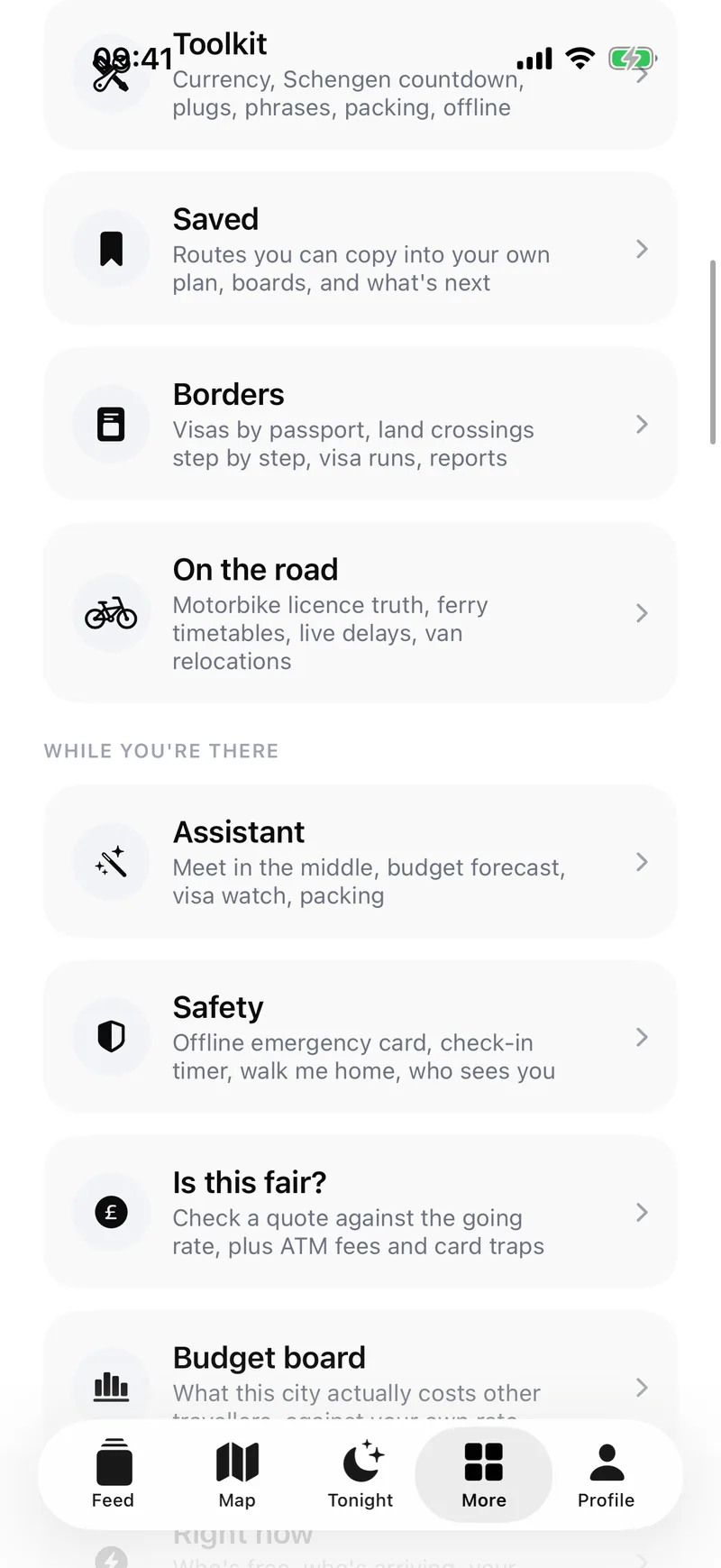
Twelve screens, all from the same tab — the one that replaces the other eight apps.
More isn't a settings page.
1 / 12
Why Amigare
Right now a backpacker runs their whole trip across apps that have never heard of each other. This is the argument for putting it in one place.
Count them honestly. Polarsteps for the map and the trail. Hostelworld and Booking for beds. A WhatsApp group for the people you met, which dies three days after everyone leaves. Instagram for inspiration you'll never find again. A spreadsheet for the budget. XE for currency. Rome2Rio or 12Go for getting to the next place. Some visa calculator you googled at the border. A Facebook group for asking whether the crossing still takes cash. And for medical and safety — realistically, nothing at all.
None of them know about each other. Hostelworld doesn't know your friend is two hours up the road. Instagram doesn't know what that hostel actually costs this week. Your spreadsheet doesn't know you're about to cross paths with the girl from Pai. Every one of them makes you type the same trip in again, and not one of them gets any smarter for it.
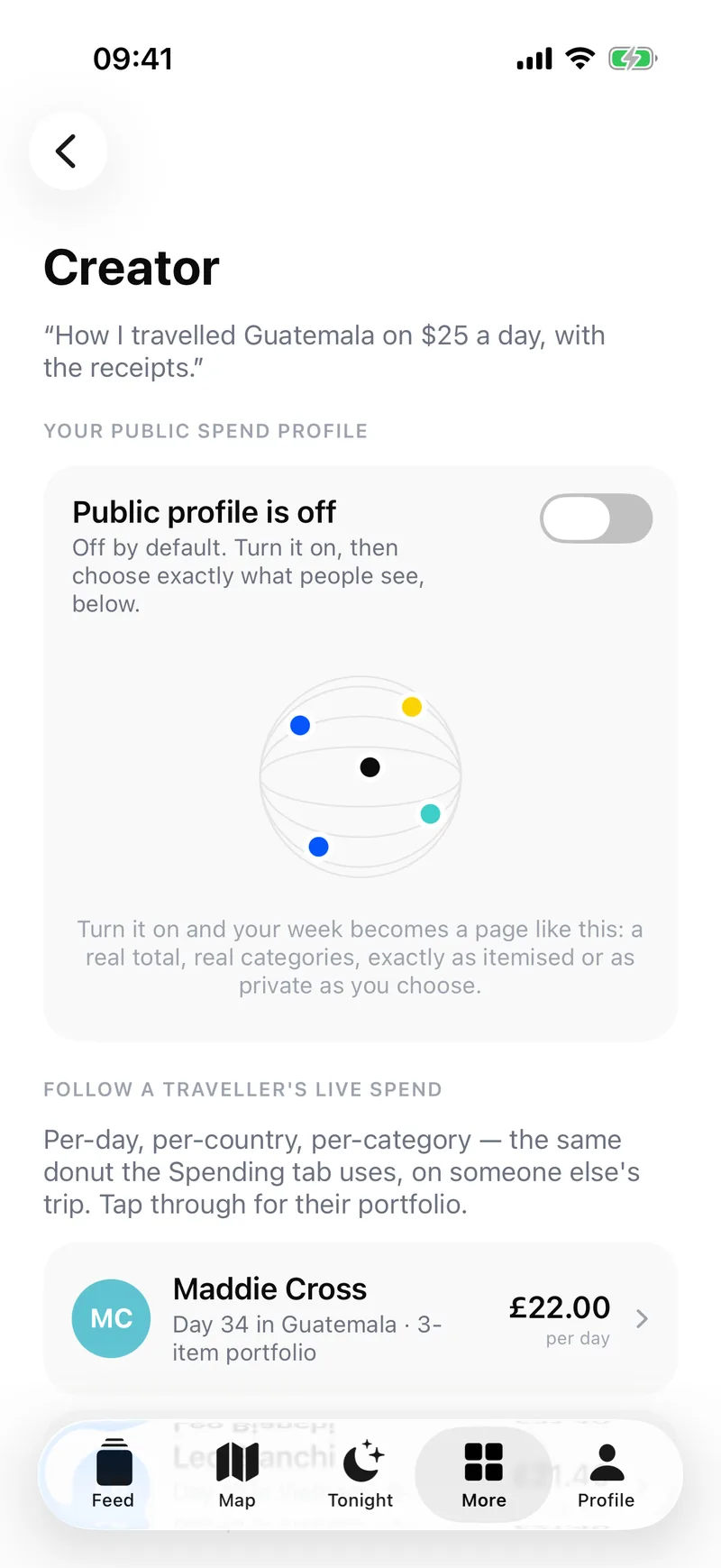
Amigare is all of it in one place — but the point was never tidiness. It's that the parts start talking to each other. Your bookings become your route. Your route finds your friends. Your friends become your plans. Your plans become your passport. Your spending becomes the price index the next traveller relies on. That compounding is the thing nine separate apps can never do.
All of it, in one
Twelve screens, all from the same tab — the one that replaces the other eight apps.
More isn't a settings page.
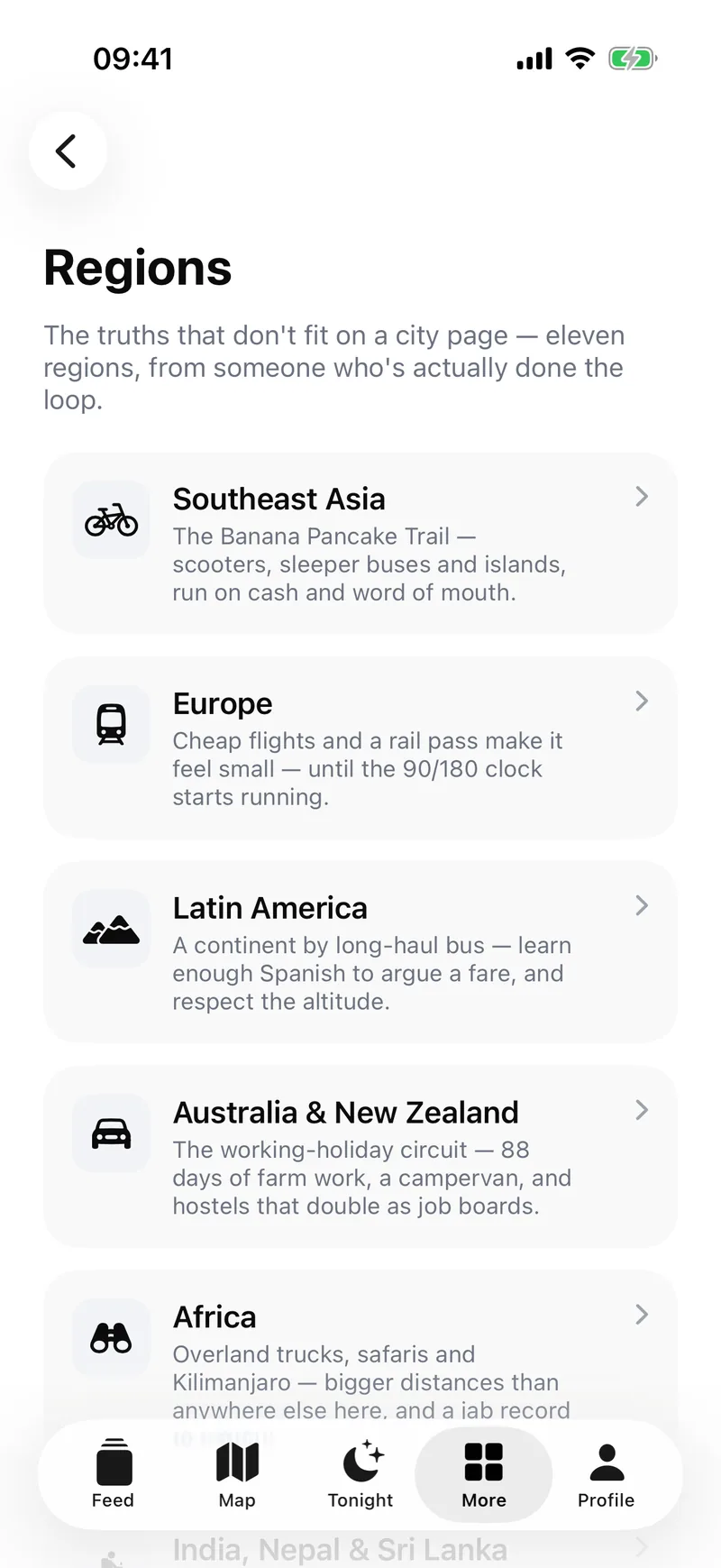
The More tab
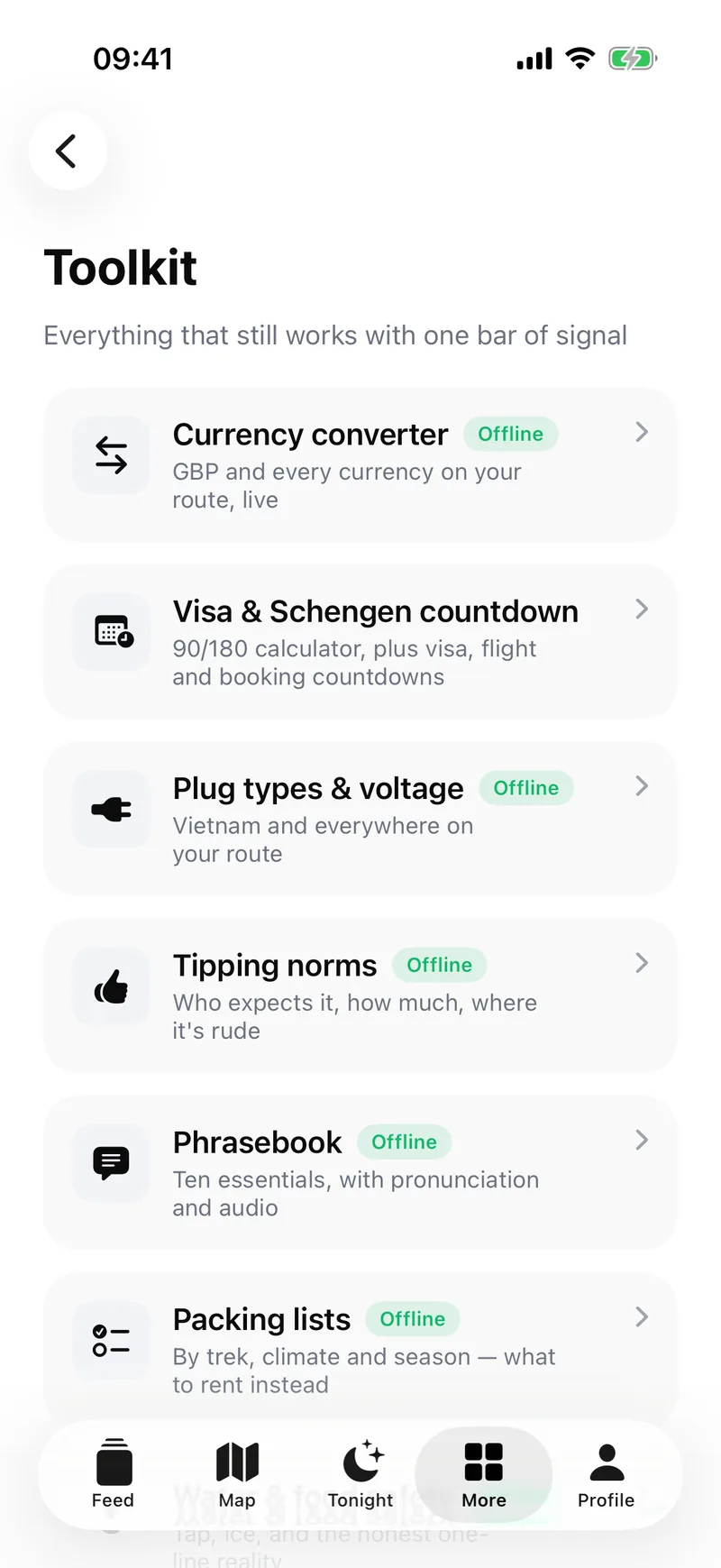
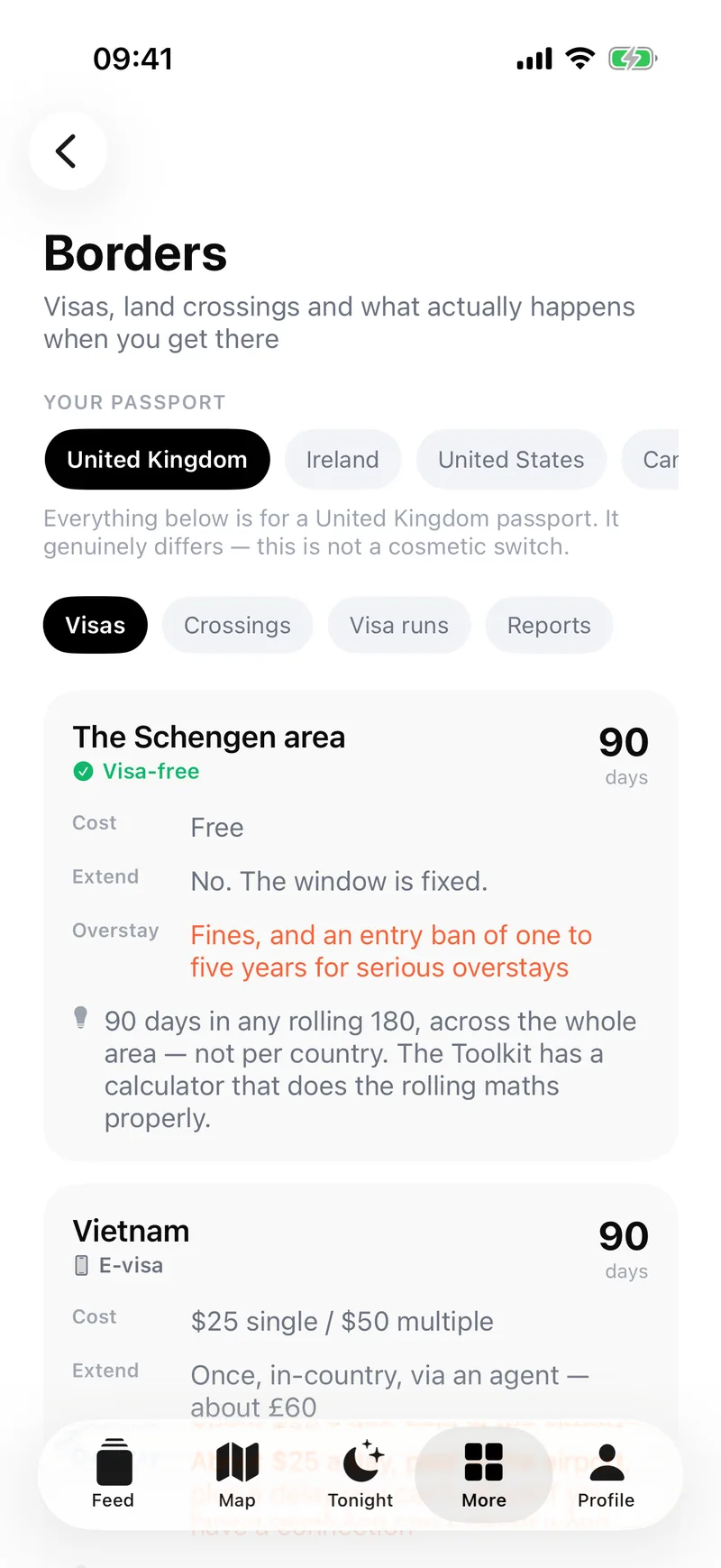
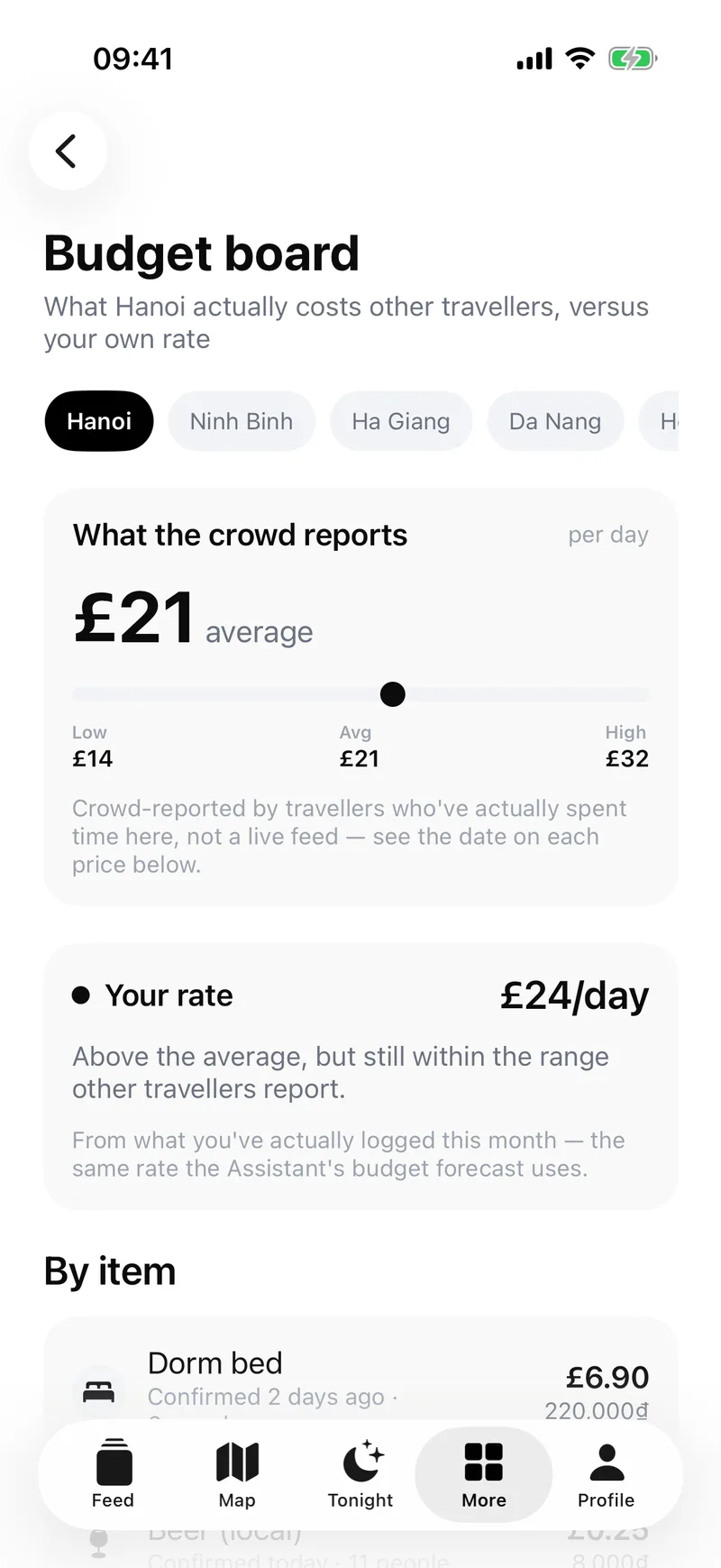
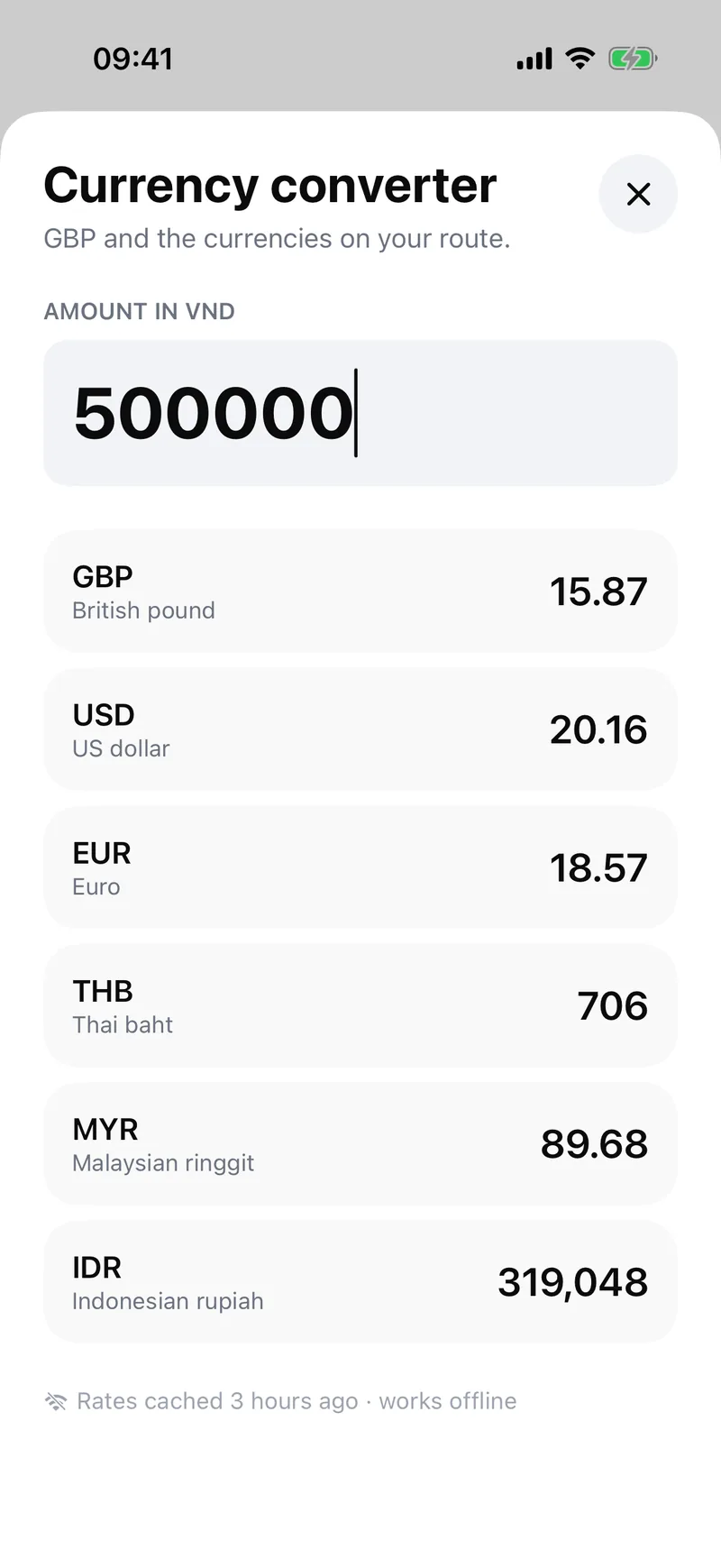
Currency conversion and an "is this fair?" check against real local prices. A Schengen 90/180 calculator that actually does the rolling-window maths. Plug types, tipping norms, water safety, a phrasebook, packing lists, sunrise and sunset. Border-crossing walkthroughs. Rail-pass sums.
And the one people don't expect: your visa countdown starts itself. The approval confirmation is already sitting in your inbox — Amigare reads it, works out the clock, and starts counting down without being asked. No diary note, no calculator at the border.
What it replaces
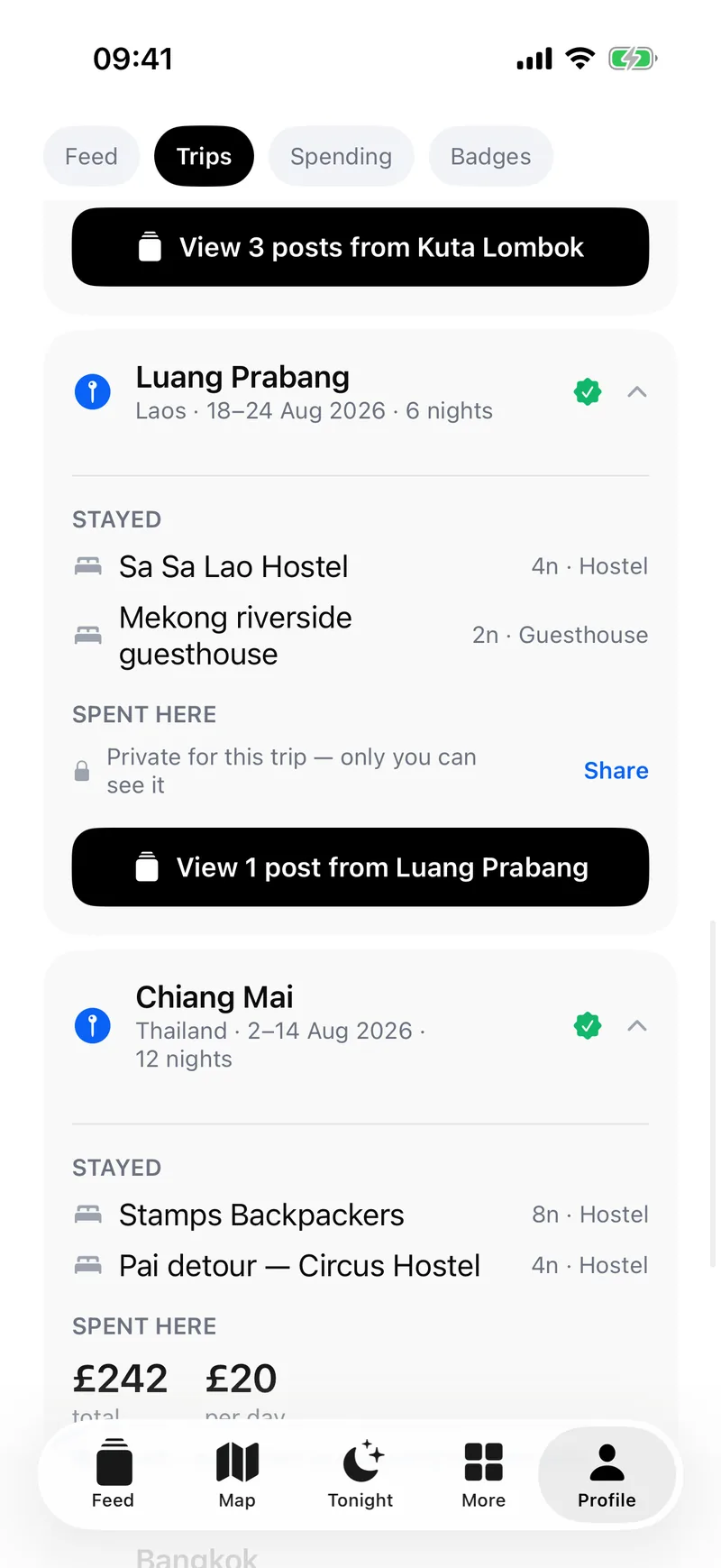
Your map and your trail — except it fills itself in from bookings instead of asking you to log every stop.
Still the place you book. Amigare just reads the confirmation and turns it into your route.
The people you met, kept — with where and when you met them, long after the group goes quiet.
Inspiration from people who are actually near you, this week, at prices you can check.
What you spent, and a live price index built from what everyone else really paid.
Conversion, fair-price checks, and a visa clock that starts itself from your approval email.
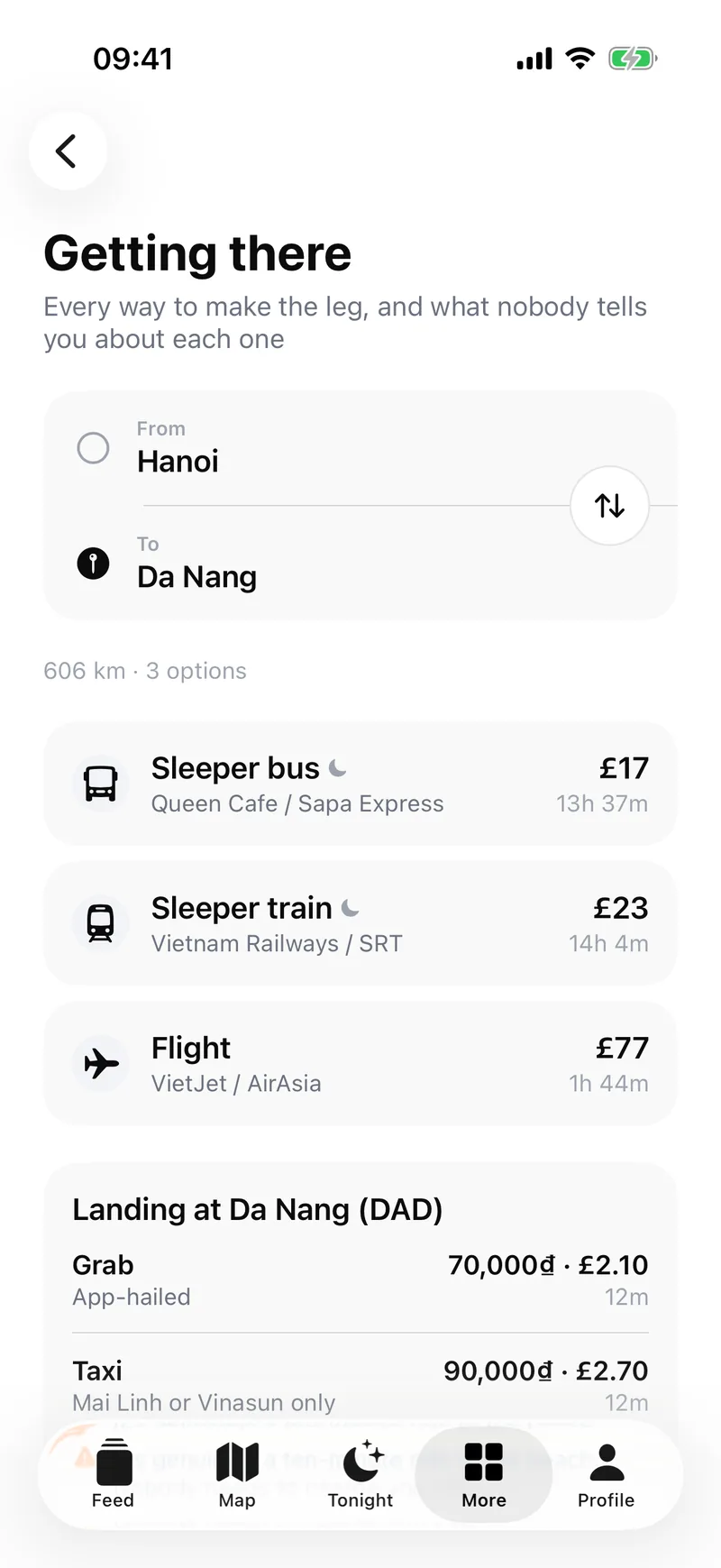
How to get to the next place — and, uniquely, how to get to a person.
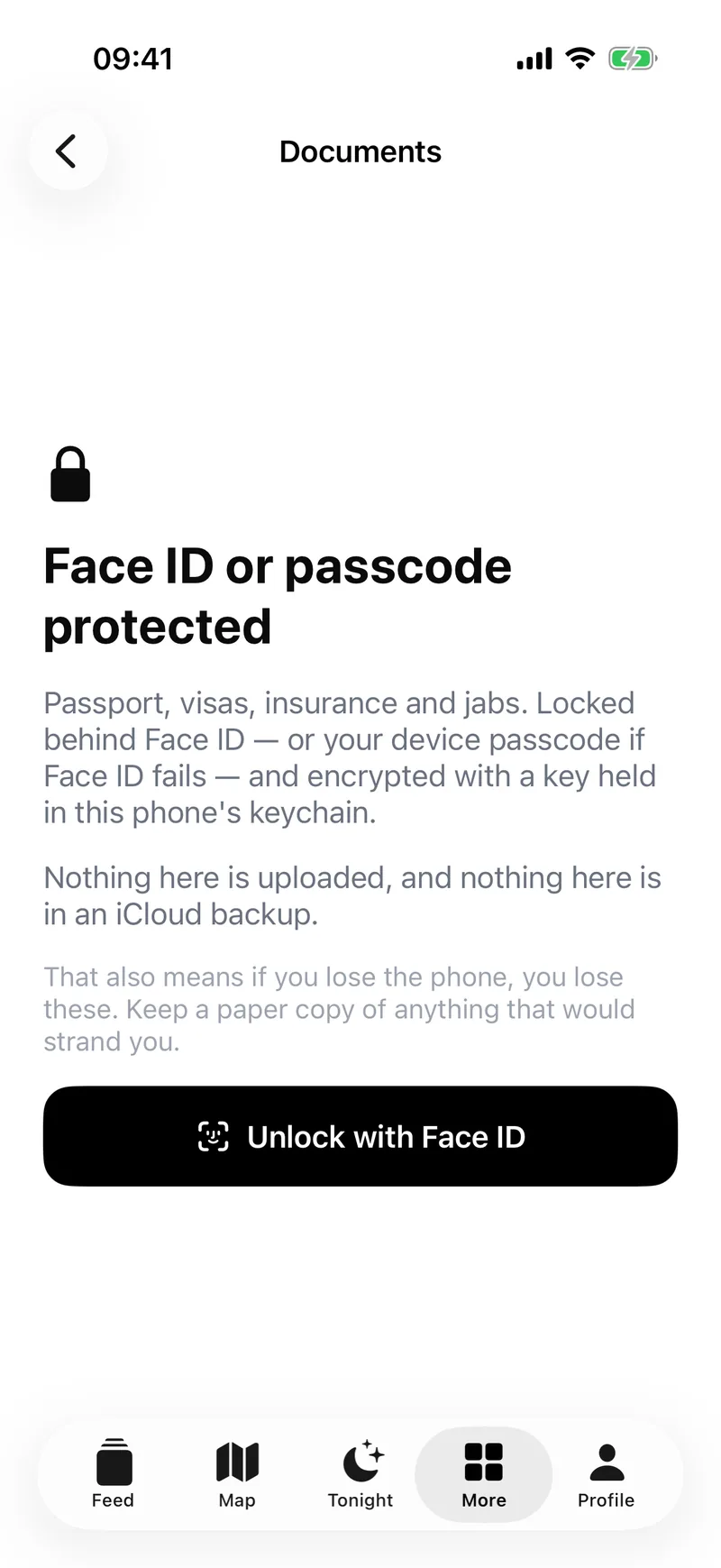
Medical details, insurance, embassy and emergency numbers, offline. Most travellers carry none of it.
And then the part nobody else has
Consolidation is the easy half. These only exist because one app holds the whole picture.
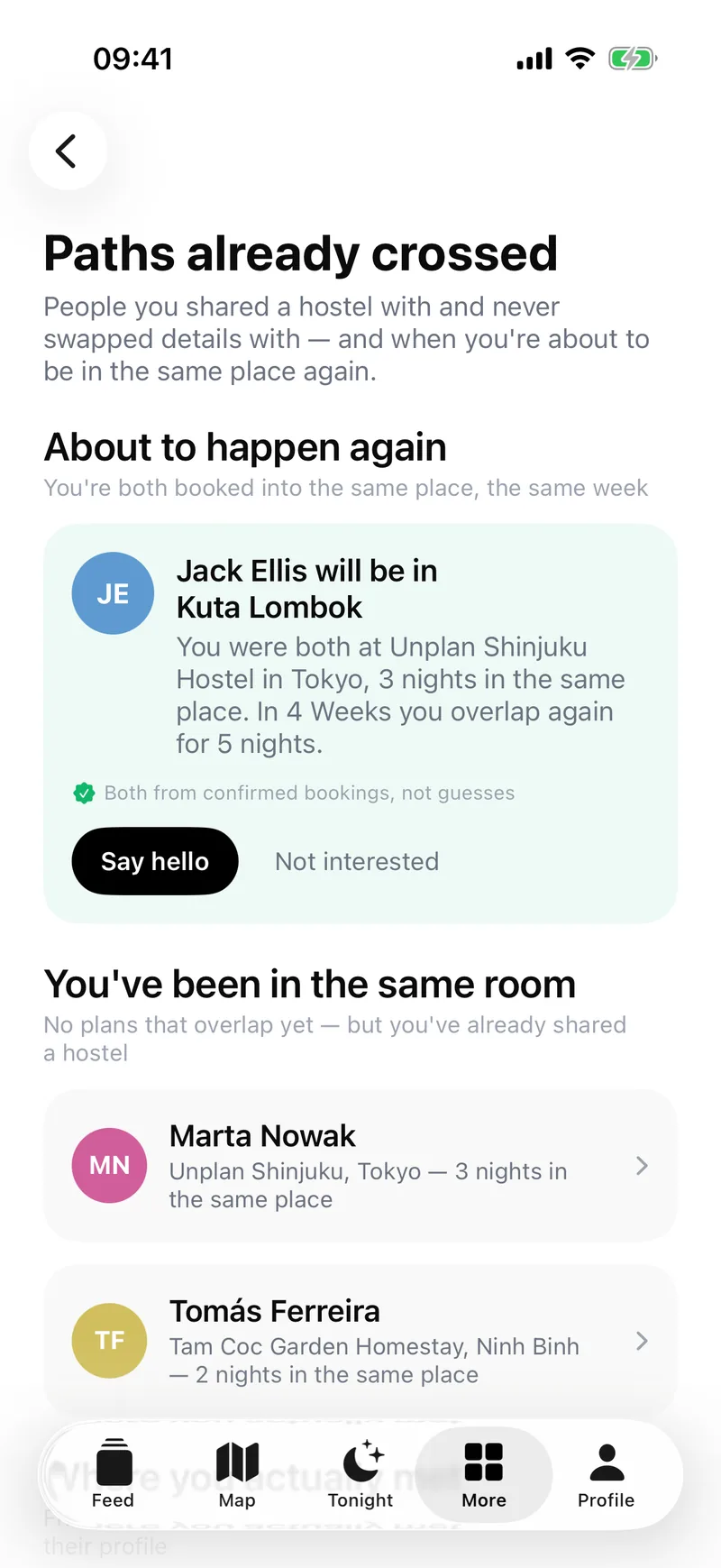
Your route and your friends' routes compared in space and time — so you're told before you miss each other, not after.
Two people who shared a dorm in Pai and never swapped a single contact detail, told they'll both be in Siargao on Thursday.
Every other app routes you to a place. Amigare finds the cheapest, fastest or most fun way to reach a friend — or a point you can both reach by Thursday.
Countries and nights counted from bookings you actually paid for. Self-claimed numbers are worth nothing; these aren't.
From the approval email already in your inbox. Nobody else is even looking there.
An emergency card built to be handed to a medic when you can't speak for yourself, with no signal required.